
Colonel’s Culture Compilation Volume 13 (December 2025)
COL. (R) Tony McConnell’s roundup of local and national stories about how companies focus on culture to increase employee engagement, retention and productivity.
The December 2025 issue explores how effective delegation defines true leadership. Rather than handling every task, leaders empower others to take responsibility, which is essential for building a strong organizational culture. Delegation not only boosts efficiency but also drives professional development by showing trust in team members and supporting their growth.
Leaders who avoid delegating—due to habit, fear, or a desire for control—risk bottlenecks, stagnant talent, and burnout. When everything depends on one person, team progress suffers. Exceptional leaders delegate to build future leaders, not just followers.
What Healthy Delegation Looks Like:
Authority with responsibility, not just tasks with deadlines
Clear expectations and outcomes—not micromanaged steps
Coaching and feedback along the way—not rescue missions at the end
Trust offered early—not earned over years
Space for mistakes, reflection, and growth—not punishment for imperfection
When people are trusted with ownership, something powerful happens:
They step up. They innovate. They take pride. They learn. And ultimately—they stay.
Delegation strengthens every other component of an Irresistible Workplace:
Culture Component How Delegation Supports It
Leadership Builds confidence, reduces dependence, grows future leaders
Recognition Creates more opportunities to notice and celebrate wins
Feedback Provides real work to coach through and develop skills
Growth Expands capability through experience—not just training
Balance Reduces leader overload and creates shared responsibility
Compensation Demonstrates investment in employee advancement and value
A challenge for leaders this month:
Choose one task you’ve been holding onto, and delegate it—with clarity, trust, and support.
Not because you have to let it go, but because someone on your team is ready to grow. When leaders delegate well, people don’t just do more—they become more. And that’s how leadership shapes a workplace people would be crazy to leave.
The Eisenhower Matrix
Productivity relies more on choosing the right tasks than simply doing more. The Eisenhower Matrix, created by President Dwight D. Eisenhower, helps organize work by urgency and importance so you focus your efforts.
The matrix splits tasks into four quadrants:
1. Urgent & Important — Do Now: Handle crises and deadlines immediately.
2. Important but Not Urgent — Plan It: Invest time in planning, growth, and relationships for long-term results.
3. Urgent but Not Important — Delegate: Assign routine or interruptive tasks to others whenever possible.
4. Not Urgent & Not Important — Eliminate: Remove distractions and busywork.
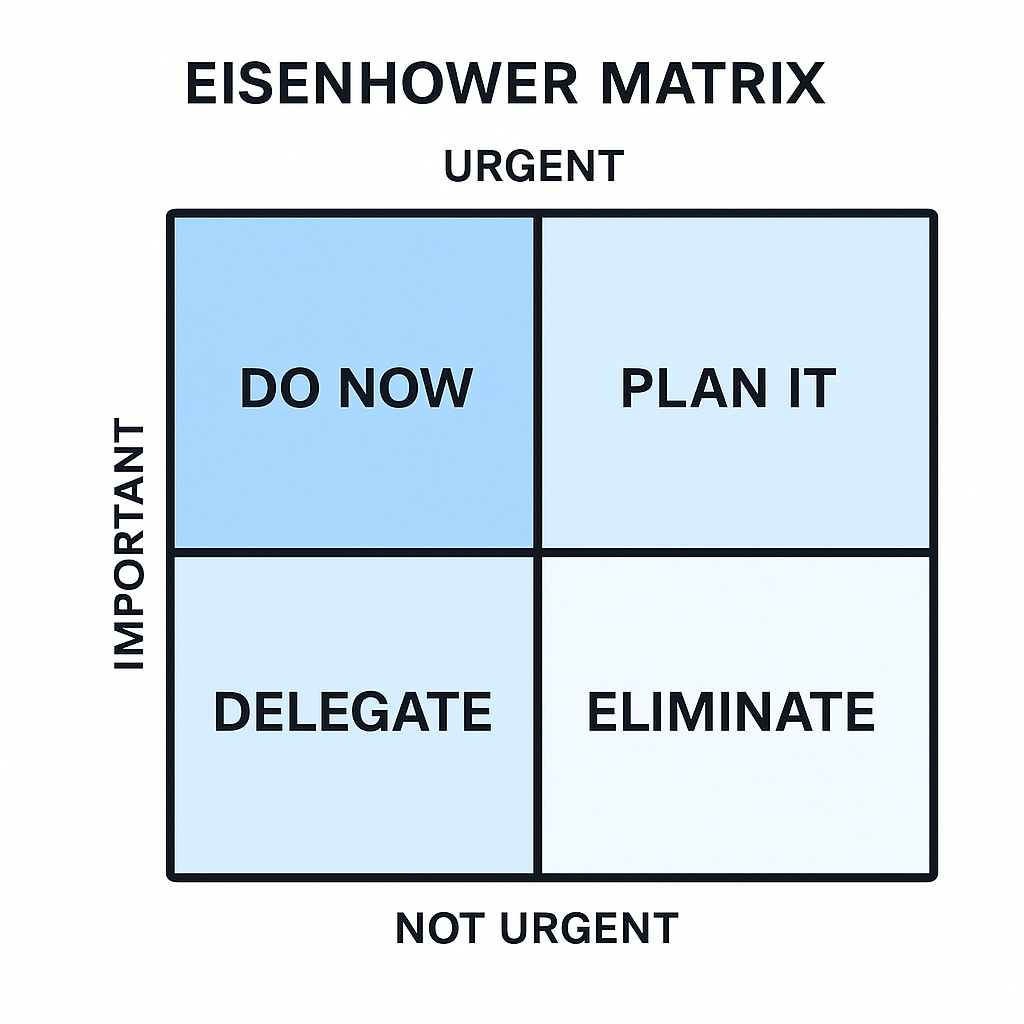
Using this framework encourages intentional prioritization, reducing stress and improving performance. True productivity is about doing what matters most.
Here are a few articles that highlight the importance of delegation in shaping workplace culture and how to use the Eisenhower Matrix to effectively prioritize tasks:
Case study: Delegation dilemma | Landscape Management Lawn Butler grew rapidly under founder Seth Kehne but stalled because he failed to delegate, leaving all employees reporting directly to him. By restructuring with a clear organizational chart and empowering managers, he reduced his direct reports, lowered stress, and improved efficiency. As a result, the company expanded its workforce, boosted sales by 50%, and achieved higher employee satisfaction.
6 Benefits of Delegation (+ Why Most Leaders Under-Delegate) The article emphasizes that effective delegation is a cornerstone of strong leadership. By empowering team members with clear responsibilities, leaders reduce their own workload, build trust, and foster creativity. This not only improves efficiency and work-life balance but also strengthens overall business culture and employee engagement.
The 5C’s Of Empowered Delegation The article outlines the 5C’s of Empowered Delegation as a framework for leaders to delegate effectively. It stresses choosing the right person, communicating clear outcomes, coaching with support, checking in regularly, and celebrating achievements. By following these steps, leaders can empower employees, avoid micromanagement, and build a stronger, more efficient team.
Mastering the art of delegation: Why entrepreneurs must let go to grow - Elite Business Magazine The article highlights that entrepreneurs must embrace delegation to unlock growth and avoid burnout. By trusting their teams, setting clear expectations, and focusing on high-value leadership tasks, they empower employees to take ownership and drive results. Effective delegation strengthens morale, efficiency, and long-term business sustainability.
Effective delegation: How managers can empower their teams Effective delegation requires managers to clearly define tasks, provide context, and empower team members with responsibility while retaining accountability. By matching assignments to skills, setting timelines, offering resources, and maintaining dialogue with feedback, leaders build trust and efficiency. This approach reduces stress, strengthens commitment, and prepares employees for greater roles.
The Eisenhower Quadrants of Productivity distinguish tasks by urgency and importance, helping individuals and teams prioritize effectively. The model suggests focusing most time on important but not urgent work (planning, innovation, strategy) while minimizing time spent on urgent crises or distractions. This intentional approach reduces stress, prevents constant “firefighting,” and builds long-term productivity.
Make 'No' Part of Every Leader's Vocabulary The article warns leaders against “shiny object syndrome,” where chasing new ideas distracts from core priorities. It recommends anchoring decisions in a clear strategy, making “no” a cultural requirement, and using systematic evaluation to separate signal from noise. By focusing on the hardest problems first and strengthening decision-making, organizations maintain momentum and avoid wasted effort.